
Analog Astronaut Training Center
Analog Astronaut Training Center (AATC) is a human spaceflight training and bioastronautics research organization. We offer a variety of programs for astronaut candidates, scientists, engineers, and space enthusiasts. AATC was founded by former European Space Agency professionals.
Why we do it?
We don't believe that human space exploration is only for selected few born in the right country. The way we think is that anyone can be trained to create a meaningful contribution to science and push humanity forward to become a multiplanetary species.
How we do it?
We prepare future astronaut candidates, bioastronautics scientist and engineers by providing high-quality training and research opportunities. Regardless of race, ethnicity, belief, nationality and gender we aim to inspire and empower the next generation of space explorers in the new Space 4.0 era1 which already had emerged.
What we do?
AATC offers a wide range of programs in human spaceflight training, bioastronautics research, software engineering, scuba diving, aviation, and expeditions. We support scientific research and education in space science and technology. We help and co-supervise BSc, MSc, and PhD theses related to space science and technology.
Our four main areas of expertise include:
-
Human Spaceflight
Participate in our analog missions or large scale colonies simulating living and working on the Moon and Mars. Join human centrifuge and parabolic flight trainings or rocket and stratospheric balloons workshops.
-
Software and Technology
Learn Python programming, Generative AI and LLM, data analysis and visualization with Pandas, numerical analysis with NumPy, or maybe TDD, DevOps or web development with Django.
-
Diving and Expeditions
Start scuba diving with us. Get certified in recreational and technical diving. Participate in diving medicine or instructor courses. Join our expeditions to Dahab, Egypt or Svalbard, Arctic.
-
Science and Education
Learn more about our publications, books and conferences. We can support your BSc, MSc, and PhD theses experiments and writing.
Programs in 2026

Get notified about the latest training opportunities
You can join our announcements group to receive the latest updates and last-minute openings for analog missions, scuba diving trips, and other training sessions. Click here to get notified about our announcements.
Analog Simulations
As of January 1st, 2026, AATC has organized 105 analog simulations, training and certifying more than 500 people. This year, we focused on organizing yet another world's largest analog mission, "Analog Colony 2," with 30 volunteers on board the new habitat. This achievement positions AATC as the global leader in analog simulations of colonies on the Moon and Mars, enhancing the statistical power of human research.
Most of the trained analog astronauts continue their careers in the space sector. AATC supports their development and growth by publishing their work on international platforms, sharing valuable international contacts and collaborations, and involving them in multiple ongoing space projects.
- Lunar and martian analog simulations in the habitat
- Habitat systems and mission operations


Missions in 2026 with available spots
| Number | Start | End | Name |
|---|---|---|---|
| AM-106 | May 02, 2026 | May 10, 2026 | Space_Ready_1 |
| AM-107 | May 16, 2026 | May 24, 2026 | Space_Ready_2 |
| AM-108 | May 30, 2026 | Jun 07, 2026 | Space_Ready_3 |
| AM-109 | Jun 13, 2026 | Jun 21, 2026 | NAWA_1 |
| AM-110 | Jul 11, 2026 | Jul 19, 2026 | NAWA_2 |
| AM-111 | Jul 25, 2026 | Aug 02, 2026 | NAWA_3 |
| AM-112 | Aug 08, 2026 | Aug 16, 2026 | NAWA_4 |
| AM-113 | Aug 22, 2026 | Aug 30, 2026 | NAWA_5 |
| AC-2 | Sep 05, 2026 | Sep 13, 2026 | NAWA_6 (Colony) |
| AM-114 | Sep 19, 2026 | Sep 27, 2026 | NAWA_7 |
In 2026 old Habitat 1.0 will be retired and replaced with the new and improved Habitat 2.0. Therefore, all analog missions in 2026 will take place in Habitat 2.0 located in Rzepiennik Suchy, Poland.
Both Space Ready and NAWA–type analog missions will be funded for selected participants who hold citizenship of a European Union member state. The grant will cover most mission-related costs, such as participation fees, food during the mission, and related expenses. Transportation to and from the habitat, as well as accommodation before and after the mission, will not be covered. There is maximum 6 founded spots available per mission.
Requirements: * Citizenship of a European Union member state * Age: 18–65 * Good physical and mental health * English language proficiency (minimum B2 level)
Application calls for both missions will be announced in early 2026.
Get notified about the latest training opportunities
If you want to receive the latest updates and last-minute openings for analog missions, scuba diving trips, and other training sessions, join our announcements group. On average, we send 2 messages a month. You can unsubscribe at any time.
Science
- Bachelor's, Master's, and Doctoral thesis research
- Grant application support
- Scientific publications
- Scientific conferences
- Scientific projects
- Scientific experiments
- Patents


Education
- Junior Space Camps
- Rocket Workshops
- 1-week and 2-week-long international space science internships for students
Bioastronautics Training
- Land Exploration Spacesuit training
- Spacesuit technician training
- Robotic operations and Human Robotic support in extreme environments
Water Trainings
- Underwater Pressurized Spacesuits trainings
- Recreational Scuba Diving trainings - certified by PADI, NAUI and IANTD
- Technical Scuba Diving trainings - certified by PADI
- Underwater EVA pre-familiarization - collaboration with International Institute for Astronautical Sciences and Survival Systems USA in Groton, CT, USA
- H.U.E.T. trainer and sea survival


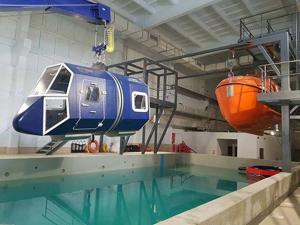
Aviation Trainings
- Human centrifuge training course - collaboration with Military Institute of Aerospace Medicine in Warsaw, Poland
- Hyperbaric, Hypobaric and Thermal chambers - collaboration with Military Institute of Aerospace Medicine in Warsaw, Poland
- Skydiving courses


Medical Trainings
- Tactical Combat Casualty Care medical courses - with former special-forces operators
- Extreme Medicine courses


Expeditions
- Svalbard, Arctic
- Trips to Bajkonur, Kennedy Space Center, Johnson Space Center, Technik Museum Speyer (for Buran), National Air and Space Museum of the Smithsonian Institution, Gagarin Cosmonaut Training Center, European Astronaut Center


People


Programs in development
- Plane pilot training course - from PPL(A) to CPL(A)
- Helicopter pilot training course - from PPL(H) to CPL(H)
- Soyuz water egress and contingency survival (fire, depress, chemical fumes)
- Exoskeleton training course
- Fire fighting - collaboration with Fire Department Academy
- Ophthalmology and emergency eye surgery
- Emergency surgery courses
- Dental emergencies
- Speleology courses
- 3D printing for space applications course
- Aerospace engineering and astronautics course
- ISRU development course
- e-learning platform for "reversed classes" for all of our training courses
Brief history
Footnotes
-
Space 1.0, can be considered to be the early study of astronomy.
Space 2.0, came about with spacefaring nations engaging in a space race that led to the Apollo moon landings.
Space 3.0, with the conception of the International Space Station, showed that we understood and valued space as the next frontier for cooperation and exploitation.
Space 4.0, is a time when space is evolving from being the preserve of the governments of a few nations to a situation in which there is the increased number of diverse space actors around the world, including the emergence of private companies, participation with academia, industry and citizens, digitalisation and global interaction. ↩